Market ·
Building the onchain capital markets of South Africa
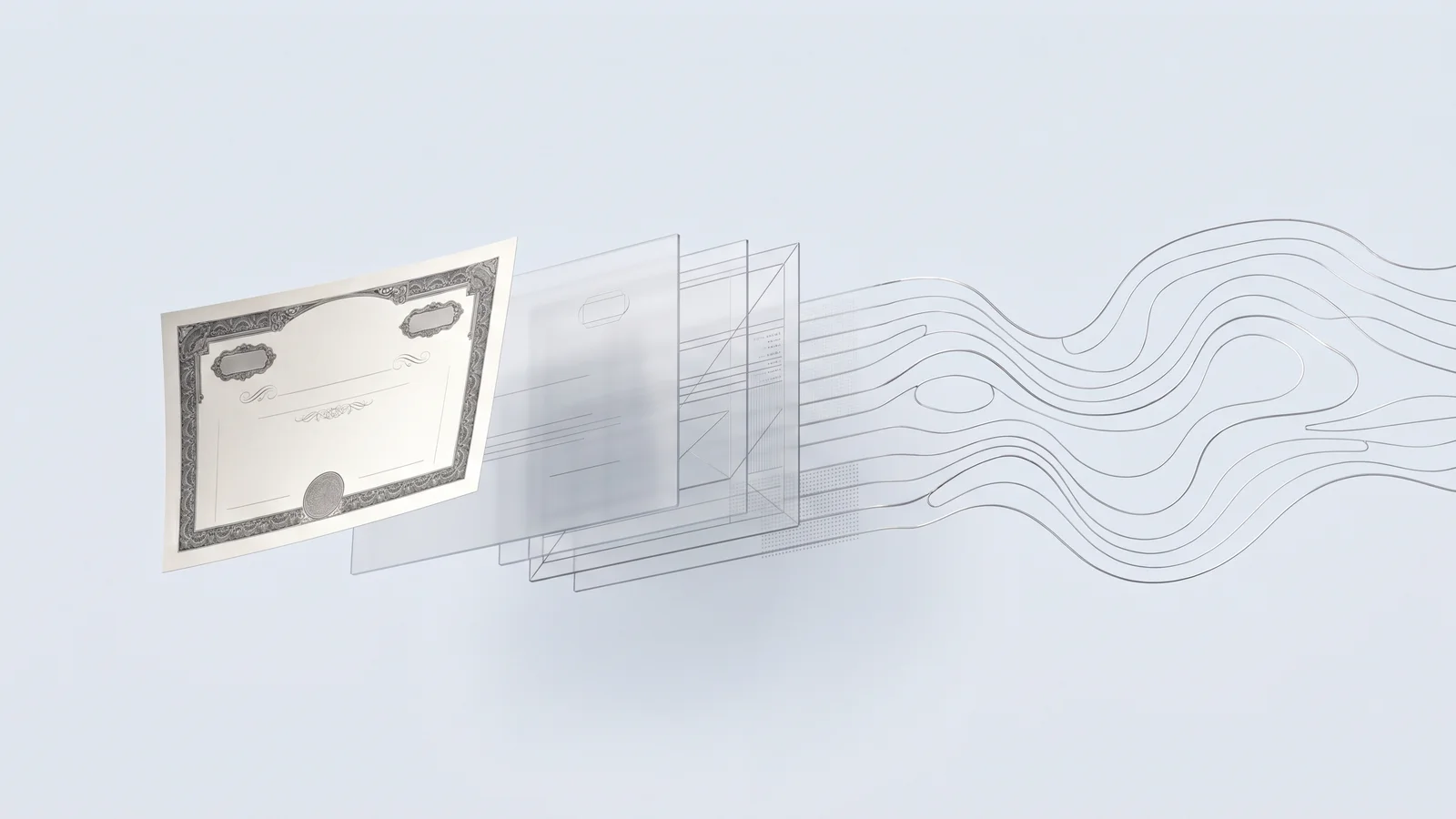
In 1998, a share in a South African company was a piece of paper. To sell it, the certificate had to be delivered, checked, and re-registered in the buyer’s name, and everyone waited while that happened.
Then the market did something that felt radical at the time. It locked the paper away in a central depository and gave each owner an electronic record. Within a few years, almost every listed share was held and traded that way.
Twenty-five years later, the same step is being taken again, this time from the electronic record to the token. I believe it will change how our markets work more than the first move did. RainFin exists to help build it here. We have been at it for three years.
A token carries rules that an electronic record cannot
An electronic record tells you who owns an asset. A token does that too, and it embeds the asset’s rules: who is allowed to hold it, where it may be sent, and what happens when interest is paid. It can change hands in the same instant as the payment for it, between two parties who have never met but have both been verified. You couldn’t build all of those rules into an electronic share certificate.
This is no longer confined to the edges. In July 2026, the depository that underpins the American stock market settled its first live trades in token form. The move is being led by licensed institutions that run markets today. The Reserve Bank has tested it here too, in Project Khokha, a trial in which the banks settled with one another in token form. I was part of the technology team that delivered the platform.
What you can do with an asset still depends on your size
A large institution holding government bonds can raise cash against them on the same day without selling. That market is deep and it works, above a certain size. A family business with a corporate bond, a saver with units in a fund, or a founder with shares in an unlisted company will mostly find that the way to turn the asset into cash is to sell it.
The same line runs through the other side of the market. Bringing an instrument to investors requires a sponsor, a registrar, a broker, a depository and an exchange. Each performs necessary work and incurs a cost, and together those costs set the minimum size of an instrument worth bringing to market. Plenty of good assets sit below that line.
So the capability is there. It is rationed by size, and tokens give us a way to widen it.
The institutions stay, and the way they work changes
I do not believe banks, exchanges and depositories will be replaced by any of this. A bank still issues the paper, assesses credit and brings clients. An exchange still admits the instrument, and a depository still keeps the record of ownership. I do not expect institutions to move real money onto new infrastructure unless someone licensed, someone they already trust, stands behind it. They are right about that.
We learned this from our own tokens. To issue them, we had to write the legal framework ourselves, the first in South Africa for issuing an asset in token form, and it has done its job. It also showed us where the next version has to stand: on the registers that licensed exchanges and depositories already maintain.
There is a second reason the institutions stay. South Africa manages the flow of capital across its border, and rules published in draft this year bring tokens into that system. As they stand, a company or a fund here would find it difficult to keep its tokens in an account on a platform run and hosted in another country. So South Africa’s exchanges, depositories, and banks will need their own platforms to issue tokens and offer everything that can be done with them, and their role will grow. This market has to be built here, which is RainFin’s work.
The technology makes the new market possible. The licensed institutions make it count in law. That is why we are building RainFin to work with them.
Five things have to be in place
We didn’t start with this list. We began with the token, and three years of issuing tokens showed us how much has to stand around one before its owner can do anything useful with it.
The record. A token has to be issued against the official register maintained by a licensed exchange or depository, and the two have to be reconciled continuously, so that there is one asset and one owner.
The rand payment must move on the same rails as the asset. That means the rand is in token form, backed one-for-one by rand held in reserve, so the asset and the money change hands together, or not at all.
The holder. Every wallet belongs to a person or a company that has been identified once, and the token itself enforces who may hold it.
The use. Creating the token is the small part. The owner of a bond or a fund unit should be able to borrow against it in minutes without selling it, and the person lending the rand should be paid interest on a loan backed by an asset worth more than the loan amount.
The reach. All of this has to be available where people already are: in their phone wallet, through their bank, or through their fund administrator.
We are starting with bonds and money market instruments, where the law is clearest, and will then broaden to fund units, shares and private assets.
We are connecting the South African market to global capital
A market built and held in South Africa need not be closed to the world. Our first step was in dollars. USDPC, our token that references a private credit strategy in North America, has been available on a South African crypto exchange since July 2025.
We are now working with asset managers abroad and with regulated exchanges there that list assets in token form, so that global capital can reach South African assets and the rates those assets pay can reach investors abroad. We will announce the first of these soon.
RainFin builds the layer between the asset and the investor
RainFin builds the token, the wallet and the market where assets are lent against. We do this in partnership with licensed institutions: an exchange, a depository, banks, fund administrators and a rand stablecoin. We will name them here when we are able to.
RainFin began as a marketplace where people lent directly to businesses. What I wanted then is what I want now, a market where a pension fund and a person with R500 receive the same rate for lending their rand, and where a business can raise cash against what it owns without selling it. The tools have caught up.
None of this is theory. Our first token issue was R100 million, and the total we have issued has now reached R500 million. The pieces are in place in South Africa today, and over the coming months we will write here about each step as it goes live.